Marrakesh is one of Morocco’s major cities, with a population of about one million people.
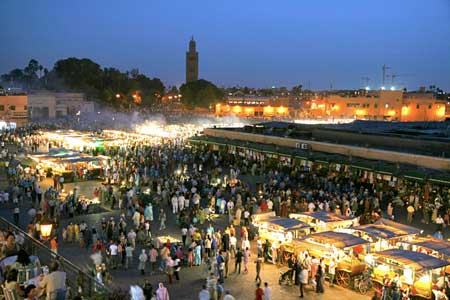
Jemaa el Fna square at night, with the Koutoubia mosque in the background
The city was founded around 1,000 years ago and boasts many historical sites including the iconic Koutoubia mosque and Jemaa el Fna square, a U.N. World Heritage site. A short walk away from this historical side of town is the Guéliz, the part of Marrakesh originally built by the French, complete with malls, restaurants, and supermarkets.
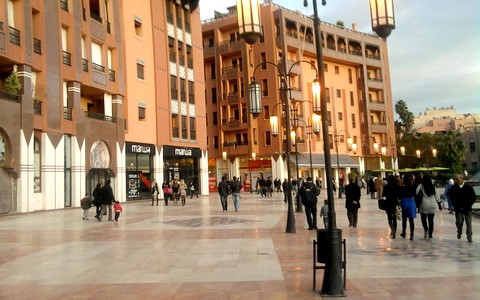
Marrakesh Place mall, Guéllz
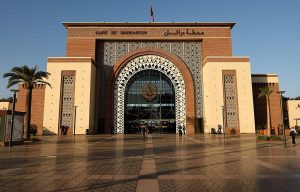
The new train station, 10 minutes by taxi from the CLC, links Marrakesh to the major cities of northern Morocco: Casablanca (2.5 hrs), Rabat (4 hrs), Fes (6.5 hrs), and Tangier (8 hrs).
Getting there
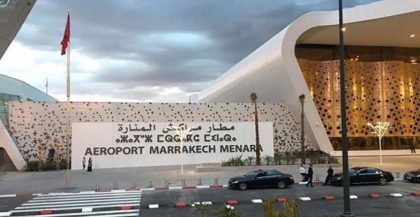
Marrakesh has a state-of-the art international airport (about 15 minutes by taxi from the CLC) which is a hub for many flights from Europe and the Middle East.
Climate
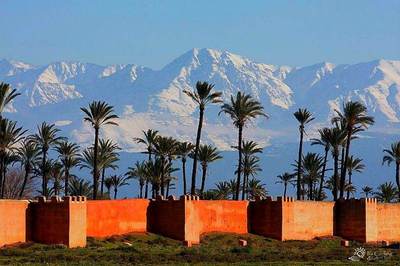
From December through February temperatures can go below 40 degrees, especially after the Atlas Mountains, 40 km away, become blanketed with snow. From late June to mid- September, temperatures sometimes exceed 110 degrees, with fall and spring see days in the 70s and 80s.
Getting around
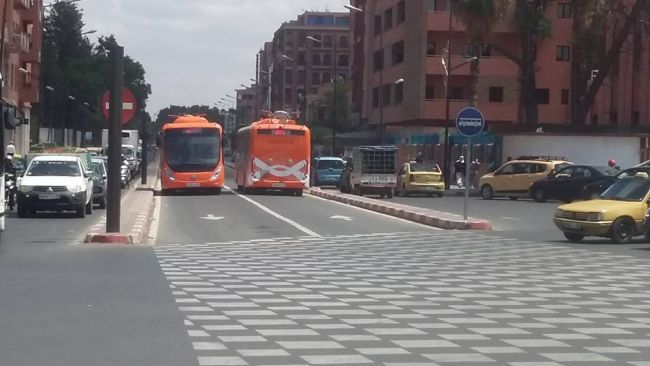
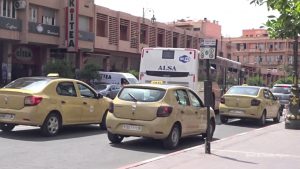
City bus and yellow « petit taxi » in downtown Guéliz
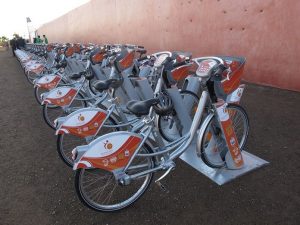
Marrakesh is generally flat and so an easy city to walk around or ride a bicycle (daily rentals available).
Alternatively, there is no shortage of taxis (between 6 and 15 dirhams to get nearly anywhere in the city) and also fairly reliable bus system (ALSA) that reaches nearly every part of the city.
Since 2017, the city has added an electric buses (see below) which run silently and without pollution between downtown and Masira suburbs with six stops along the way. The fare per ride is 4 dirhams (about 50 cents in US currency).